


The Sidekick Cloud Disaster
- 13 Oct 09, 09:48 GMT
A year ago, I visited a giant data centre belonging to Microsoft a hundred miles or so north of Seattle in Washington State.
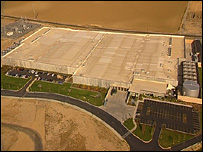 It was an impressive sight: room after room of servers cooled by by electricity which arrived from a nearby hydroelectric scheme, plus two sources of back-up power if the mains connection should somehow fail. All of this was just part of Microsoft's substantial global investment in cloud computing, to ready itself for a future where we'd all keep more and more of our data online in secure locations like this.
But I had a question.
What if, due to some unforeseeable chain of circumstances, the whole place went up in smoke - taking our valuable data with it? Back they came straight away with an answer - "redundancy". No, no, not mass sackings amongst Microsoft employees responsible for data loss, but backup systems.
In other words, every single piece of data stored in the Washington data centre would also be held elsewhere, just in case. It all seemed pretty satisfactory to me - and indeed I've put more and more of my own data into "the cloud", from Google Documents, to web-based e-mail, to photo libraries stored on Facebook.
Now comes the Sidekick story. Users of a popular mobile phone on the American T-Mobile network have lost some of their data, and the apparent cause is a server failure.
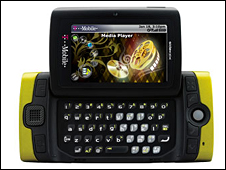 It's being called the biggest disaster yet for the whole concept of cloud computing. The software and the services for the Sidekick phone are designed by a company called Danger, which helps users store their contacts, photos and all sorts of other personal data in the cloud. But Danger was bought last year by - guess who? - Microsoft, so the software behemoth is now going to cop a lot of the flak for this disaster.
The latest update on a T-Mobile forum says:
"T-Mobile and Microsoft/Danger continue to do all we can to recover and return any lost information. Recent efforts indicate the prospects of recovering some lost content may now be possible."
But it also talks of compensating people if they suffer "a significant and permanent loss of personal content" - which sounds pretty ominous.
What's not really clear is what happened to the famed redundancy of Microsoft's cloud operation. Reuters is quoting a statement from the company talking of "a confluence of errors from a server failure that hurt its main and backup databases supporting Sidekick users." But does that mean the backup databases were in the same place as the main ones?
If we're all to entrust our most valuable data to Microsoft's - or anyone else's - cloud, we're going to need to be sure that they tend it as if it were their own. If this kind of reassurance is not forthcoming, then all those forecasts of explosive growth in cloud computing will be, well, redundant.

Steve Jobs and Tinker Bell
- 13 Oct 09, 09:23 GMT
A more unlikely pairing you could never imagine, but the New York Times (NYT) is reporting that Apple co-founder and guru Steve Jobs has been sprinkling a little fairy dust over the Disney empire.
 Disney turned to the man whose firm is known for its design aesthetic because it wanted to overhaul its shops and turn them into the ultimate shopping experience, the way Mr Jobs has done with Apple's outlets.
Jim Fielding, the president of Disney Stores worldwide told the NYT:
"The world does not need another place to sell Disney merchandise - this only works if it's an experience".
The top-to-toe refurbishment will cover 340 shops throughout Europe and America - and some new stores, including a flagship outlet at New York's Times Square.
The idea is to give the Disney retail arm a high-tech makeover to "make children clamour to visit the stores and stay longer, perhaps bolstering sales as a result." There is no "perhaps" about it.
 So where, you may ask, does Mr Jobs come in?
Well, as a member of the Disney board and a shareholder, he encouraged the Disney management to let their imagination fly.
As a result, Disney is to adopt Apple touches like mobile checkouts and allowing customers to choose film clips to watch or to take part in karaoke contests or live chat with Disney Channel stars via satellite. (Yes, I know there are no karaoke events in Apple stores... but you never know.)
High-tech tricks include walking by a "magic mirror" where Cinderella might appear and speak or the whole store might be made to smell like a Christmas tree if a clip from Disney's A Christmas Carol is playing.
Disney told the paper that it has been working on a full-scale, fully-stocked shop inside a secret location in Glendale, California to shape an overall philosophy and work out any kinks. That was on the advice of Mr Jobs.
While some may consider its shops tired and old-fashioned, Disney is still a retail titan. Its licensed consumer products pulled in $30bn (£19bn) in global sales last year.
And that Tinker Bell connection? Well, a section of the store will be called WWTD: What Would Tinker Bell Do?
As Macworld notes, "it's sort of a Genius Bar except, um, with fairies."
The BBC is not responsible for the content of external internet sites
This is dot.life - a blog about technology from BBC News.
Rory Cellan-Jones is the BBC's technology correspondent.
Maggie Shiels is the BBC's tech reporter based in Silicon Valley.
Archive
« January 2010
| Sun | Mon | Tue | Wed | Thu | Fri | Sat |
|---|---|---|---|---|---|---|
| 1 | 2 | |||||
| 3 | 4 | 5 | 6 | 7 | 8 | 9 |
| 10 | 11 | 12 | 13 | 14 | 15 | 16 |
| 17 | 18 | 19 | 20 | 21 | 22 | 23 |
| 24 | 25 | 26 | 27 | 28 |
Being Discussed Now
- Logging out... and straight back in(3)
- Gadgets of the Noughties(20)
- Plastic Logic's long journey to Vegas(21)
- Sexting teens(17)
- Wikipedia on the wane?(49)
- 'Cooling-off' for mobile phones? Not on the High Street(37)
- 2009 - the social year(36)
- Twitter, Iran and #uksnow(25)
- Broadband Britain - how far down the league?(55)
- Microsoft and Murdoch: Teaming up to bash Google?(34)
BBC Technology Headlines
- %28none%29
%28none%29 - %28none%29
%28none%29 - %28none%29
%28none%29
Visit the Technology index
Visit the BBC News website
Rory's TV/Radio reports
- Residents block Google car
Broadcast: 3 April 2009 - New adverts to tackle film piracy
Broadcast: 2 April 2009 - Call to scrap 'illegal databases'
Broadcast: 23 March 2009 - Female robot takes to the catwalk
Broadcast: 16 March 2009 - Super-charged battery breakthrough
Broadcast: 12 March 2009

- News Editors
- Sport Editors
- Journalism Labs
- BBC Internet Blog
- Radio 4 Blog
- Peston's Picks
- Nick Robinson's Newslog
- Stephanomics
- Mark Easton's UK
- Mark Mardell's America
- Nick Bryant's Australia
- Andrew Harding on Africa
- Gavin Hewitt's Europe
- Soutik Biswas' India
- dot.Rory
- Science: Jonathan Amos
- Richard Black on environment
- Today: Tom Feilden
- Fergus Walsh's medical files
- Newsnight: Paul Mason
- Newsnight: Mark Urban
- Torin Douglas
- Will Gompertz's arts
- Phil Coomes on photojournalism
- Magazine Monitor
- Mark D'Arcy in Westminster
- NI: Mark Devenport
- Scotland: Brian Taylor
- Scotland: Douglas Fraser
- Wales: Betsan Powys
- Martin Rosenbaum on FOI
- 5 Live Breakfast
- Newsnight
- PM programme (iPM)
- World Tonight: Robin Lustig
