


Listening to Mr iPhone
- 1 Jul 09, 14:21 GMT
By any measure, he is among the most important figures in technology of the last decade, a major influence on the way we use and interact with computers and mobile phones, a British designer who ranks with the Conrans and the Dysons. But have you ever heard Jonathan Ive, the Apple designer behind the iMac, the iPod and the iPhone, talk about his work?
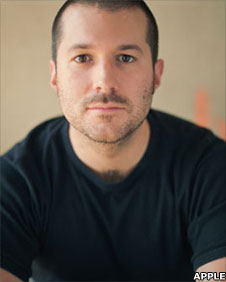 I hadn't - so when a friend invited me to hear him speak at the Royal College of Art's Innovation Night I leaped at the chance.
Now one of the reasons you don't hear much from the Apple designer is that he is, by his own admission, a hesitant and unpolished speaker. He told the audience at the Royal College that he's learned that preparing presentations takes him away from perfecting a product, so he'd rather let others do the talking.
But the format last night was a fireside chat between Ive and the Rector of the Royal College Sir Christopher Frayling in front of an audience of students and what seemed like the whole of the London design community.
Amongst his own people, the designer seemed more comfortable than faced with intrusive probing from some impertinent hack - though I did manage to get one question in about what he'd have liked to change about the first version of the iPhone(no clear answer, I'm afraid, though he said designers were never satisfied with their work).
And what emerged were some fascinating insights into the culture of Apple and the craft of industrial design. Ive was insistent that the key to Apple's success was that it was not driven by money - a claim that may raise eyebrows amongst shareholders and customers - but by a complete focus on delivering just a few desirable and useful products.
"For a large mulit-billion dollar company we don't actually make many different products," he explained. "We're so focused, we're very clear about our goals."
He said that Steve Jobs had always made it very clear that this focus on products was the only reason for Apple to exist - and contrasted the culture with that of other companies who talk about having similar aims: "If you have to spend time institutionalising that, talking about it, you end up chasing your tail."
So how did the company decide what customers wanted - surely by using focus groups? "We don't do focus groups," he said firmly, explaining that they resulted in bland products designed not to offend anyone.
Christopher Frayling reminded us at that point of Henry Ford's line about what his customers would have demanded if asked - "a faster horse" - and it's surely true that the point of innovative companies is to come up with products that customers don't yet know they need.
But it was the physicality of design work that Jonathan Ive was keen to stress - from the Apple design workshop full of machines, throwing off a lot of noise and dust, to visits to Japanese aluminium craftsmen to learn how that material could be crafted into a laptop casing. Yes, of course he and his team use all the latest computer-aided design tools - but he also likes to knock out a physical prototype and feel the weight of it in his hand.
He told a story about how, as a boy, he'd taken apart an old-fashioned alarm clock, and inside the spare outer casing found a mass of workings, "an entire watch factory".
Extraordinary complexity wrapped in a simple, functional, touchable, beautiful case - that seems to be the Apple design ethic.
So an inspiring 45 minutes in the company of a design genius - a few fragments of which I filmed using one of Mr Ive's own products. But at the end, Apple's PR team came up to stress that this was a private event and would I please keep the pictures to myself.
Another example of the somewhat paranoid culture of a company which always wants to be in complete control of its message. But maybe that's another reason for its success...
Facebook - growing up fast
- 1 Jul 09, 08:42 GMT
Remember when Facebook was the scrappy kid on the social networking block, with its teenage boss (ok, he's now old enough to order alcohol in most states), its devil-may-care attitude to money, and its apparently casual approach to grown-up issues like privacy and unsuitable content?
Just a year or so back, it was MySpace which seemed far more mature - it had a lucrative advertising deal with Google, a wise old parent in Rupert Murdoch, and employed dozens of consultants around the world to deal with the concerns of regulators and politicians.
But now MySpace is fading fast, shedding hundreds of jobs, closing offices around the world, and saying goodbye to its founders Chris De Wolfe, who has left, and Tom Anderson, who is reportedly being paid to stay at home, while still being the automatic "friend" of all new joiners.
By contrast, in London this week I came across evidence that Facebook is growing up very rapidly, meeting two new executives who appear to symobolise the company's new-found respectability and confidence.
In order to see this content you need to have both Javascript enabled and Flash installed. Visit BBC Webwise for full instructions. If you're reading via RSS, you'll need to visit the blog to access this content.
I was in the company's compact Soho Square premises - they're moving round the corner to a bigger place in Carnaby Street next week - to interview the chief operating officer Sheryl Sandberg.
What exactly is a COO? I'm never sure - but at Facebook it seems to mean the person who runs the business while Mark Zuckerberg concentrates on the cool stuff. Sheryl Sandberg has one of those very scary CVs - a Harvard MBA, then a spell working as chief of staff to Bill Clinton's treasury secretary Larry Summers, then a top job at Google before heading to Facebook.
And her message to me was not about some new way of sending friends virtual sheep or making your profile look really cool, but something far more surprising - Facebook is actually making money. Or at least is on course to be "cash-flow positive in 2010."
Now a decade ago when every dotcom measured its worth in "eyeballs" on its site, and claimed it was on course to break even pretty soon, I'd have been quite sceptical about Ms Sandberg's forecast. But back then the whole point was to race as fast as you could towards an IPO( a stock market float) or a takeover by a bigger business so that you could cash the huge cheque from gullible investors and go on making losses for years.
Facebook, by contrast, appears determined to stay independent, despite selling small stakes at astronomic valuations to both Microsoft and a Russian media firm, and rumours of an impending IPO sparked by the appointment this week of a new chief financial officer.
Yet it is obviously spending pretty freely - the cost of servicing 200 million users around the world who all want to upload photos and generally keep the servers humming is growing by the day.
I put it to Sheryl Sandberg that each new user, especially those in less lucrative advertising markets like India, must be costing the company money - but she insisted that wasn't the case:
"Not only are we covering our current costs but we are making major investments in our growth all over the world and our revenue from advertising is covering those costs."
I've been sceptical about the ability of any social network to make serious money from advertising - who wants soap powder messages in the middle of a conversation with friends - but Facebook says its revenue is up 70% year-on-year in the middle of the worst recession many in the advertising business can remember.
True, a 70% rise compared to a period when the company made small change from ads may not tell the full story - but Facebook appears confident that it's cracked a way for advertisers to be part of the conversation rather than an intrusive annoyance.
And the other person I met at Facebook's London office symbolised the firm's determination to deal with its other challenge - regulation.
Richard Allan, a former Liberal Democrat MP and then director of European government affairs at Cisco, has been hired to lobby European regulators for Facebook.
With the EU mulling over tighter privacy rules for firms that share their users' data, and with continuing concern from politicians about issues like cyber-bullying and hate-speak on social networks, there will be plenty on Mr Allan's plate.
So, yes, Facebook suddenly looks like a mature business, poised for steady progress towards profitability and ready to engage in grown-up conversations about its place in society. Then again, so did MySpace a year ago, until it suddenly went out of fashion.
So Facebook now has to work out how to be both grown-up and cool at the same time - never an easy trick to pull off, as my children sometimes remind me.
The BBC is not responsible for the content of external internet sites
This is dot.life - a blog about technology from BBC News.
Rory Cellan-Jones is the BBC's technology correspondent.
Maggie Shiels is the BBC's tech reporter based in Silicon Valley.
Archive
« January 2010
| Sun | Mon | Tue | Wed | Thu | Fri | Sat |
|---|---|---|---|---|---|---|
| 1 | 2 | |||||
| 3 | 4 | 5 | 6 | 7 | 8 | 9 |
| 10 | 11 | 12 | 13 | 14 | 15 | 16 |
| 17 | 18 | 19 | 20 | 21 | 22 | 23 |
| 24 | 25 | 26 | 27 | 28 |
Being Discussed Now
- Logging out... and straight back in(3)
- Gadgets of the Noughties(20)
- Plastic Logic's long journey to Vegas(21)
- Sexting teens(17)
- Wikipedia on the wane?(49)
- 'Cooling-off' for mobile phones? Not on the High Street(37)
- 2009 - the social year(36)
- Twitter, Iran and #uksnow(25)
- Broadband Britain - how far down the league?(55)
- Microsoft and Murdoch: Teaming up to bash Google?(34)
BBC Technology Headlines
- %28none%29
%28none%29 - %28none%29
%28none%29 - %28none%29
%28none%29
Visit the Technology index
Visit the BBC News website
Rory's TV/Radio reports
- Residents block Google car
Broadcast: 3 April 2009 - New adverts to tackle film piracy
Broadcast: 2 April 2009 - Call to scrap 'illegal databases'
Broadcast: 23 March 2009 - Female robot takes to the catwalk
Broadcast: 16 March 2009 - Super-charged battery breakthrough
Broadcast: 12 March 2009

- News Editors
- Sport Editors
- Journalism Labs
- BBC Internet Blog
- Radio 4 Blog
- Peston's Picks
- Nick Robinson's Newslog
- Stephanomics
- Mark Easton's UK
- Mark Mardell's America
- Nick Bryant's Australia
- Andrew Harding on Africa
- Gavin Hewitt's Europe
- Soutik Biswas' India
- dot.Rory
- Science: Jonathan Amos
- Richard Black on environment
- Today: Tom Feilden
- Fergus Walsh's medical files
- Newsnight: Paul Mason
- Newsnight: Mark Urban
- Torin Douglas
- Will Gompertz's arts
- Phil Coomes on photojournalism
- Magazine Monitor
- Mark D'Arcy in Westminster
- NI: Mark Devenport
- Scotland: Brian Taylor
- Scotland: Douglas Fraser
- Wales: Betsan Powys
- Martin Rosenbaum on FOI
- 5 Live Breakfast
- Newsnight
- PM programme (iPM)
- World Tonight: Robin Lustig
