


Apple - angering the fans?
- 9 Jun 09, 10:40 GMT
As ever, there was huge excitement amongst Apple's loyal fanbase (does any other commercial business have fans not consumers?) as news emerged last night of a new iPhone.
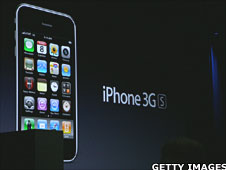 But, in the UK at least, the excitement has swiftly turned to anger over the sheer, eye-watering expense of owning the iPhone 3GS. So are O2 and Apple in danger of alienating existing iPhone users while doing nothing to attract new customers?
Contrary to expectations, O2 has retained its exclusivity over the iPhone but it looks as though that was at a price, and one that is now being passed on to consumers.
If you sign up to an 18-month contract for the new phone, at £34.26 a month, you'll still pay £184.98 for the 16gb version or £274.23 for the 32gb handset. Is there another phone that will cost you that much when you sign up to a chunky contract?
It's the early adopters, those who bought the original iPhone and then upgraded to the 3G version, who are really spitting tacks. They somehow thought they were special, and, just as last time, would be offered a deal to make upgrading to the 3GS affordable. But no. The only way they can upgrade is to buy out the remainder of their contracts and start again - which would be massively expensive.
O2 indicated to me that it was slightly unrealistic to expect the firm just to write off the big subsidy they'd already enjoyed on the 3G version - but some dedicated fans are already starting online petitions to complain about the cost of an upgrade.
But if the loyalty of the fanbase is being tested surely there's something to woo new users to the iPhone? Not in the UK. While there is a price cut in the US for the old iPhone 3G, that isn't the case here.
It'll still cost £96.89 on an 18-month contract - and I can't see cash-strapped young phone fans rushing to buy something that can't even claim to be the latest hot phone.
O2 was keen to point out that the 3G iPhone was now free on a 24-month contract - but are many people really willing to tie themselves in for that long?
Now Apple and O2 have never pretended that the iPhone is anything other than a premium product with a premium price and so far that strategy has proved remarkably successful.
One retailer told me this morning that people would still be queuing round the block when the new model goes on sale on 19 June. I'm not so sure. Those queues are usually made up of long-term Apple fanatics - but even they may not be willing to pay the huge price needed to become a 3GS early adopter.

Apple's big day
- 9 Jun 09, 09:15 GMT
The World Wide Developers Conference is a marquee event for Apple, at which the company usually tries to build plenty of buzz and then knock one out of the park with a big product announcement.
That headline-grabbing moment failed to materialise this year; in all honesty, the two-hour event was, well, a bit boring.
A stream of execs trotted out a series of hardware and software improvements; as one analyst told me, these were just "iterative improvements...and far from earth shattering".
Sure, there were some cheers and applause for price reductions on Macs and on Snow Leopard. And of course, the hundred-buck saving on the iPhone 3G caused a bit of excitement but there was really nothing that set the heather on fire.
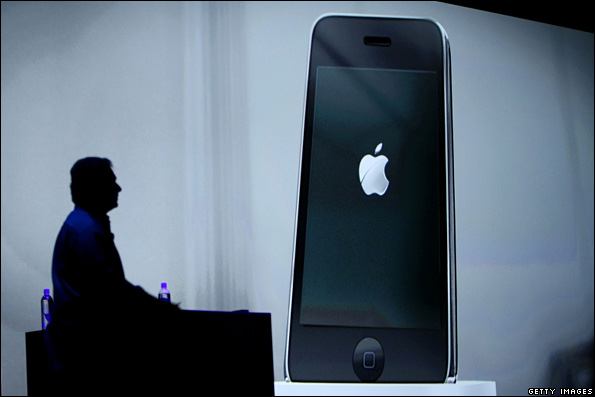
Even when Apple's head of marketing, Phil Shiller, came to the big "a-ha" moment and announced the new iPhone 3GS, it was with little fanfare. None of the famous set-up used by Steve Jobs to great effect when he utters the words "one last thing."
I was third row from the front, squeezed in with a bunch of serious snappers with their souped-up cameras - but, throughout the keynote, many of them seemed to find it hard to let their shutters fly.
The event just seem to lack energy and sizzle. Rather unusually, there were some technical glitches that many might associate more with Microsoft than Apple.
When software boss Scott Forstall donned a white lab coat to blow up a balloon, the necessary hot air did not happen. It was all part of a stunt to illustrate an app aimed at making science more fun and interactive for kids. Pasco's Wayne Grant handed the affair with aplomb.
Shortly after that, the tech gods then cursed Line 6 and Planet Waves, who were giving a demo for an app to control guitars and amps, leaving us all a little aurally challenged.
Don't get me wrong: the Apple crew did a fine and professional job, but it did seem as though they were placeholders - as though the series of announcements was a precursor for something that might excite later in the year when Mr Jobs gets back in the driving seat.
And while there was little chance that he was ever really going to put in an eleventh hour appearance here, many attendees I spoke to are looking forward to his return. Not because they believe that anyone has done a poor job in Mr Jobs's absence, but simply because he is just one of those guys who manages to add some fizz to proceedings and shake up the apple cart.
Interestingly enough, some findings released by the website Glassdoor give a bit of an insight into the last few months at Apple. The site allows users to write anonymously about life within their company and to blow off some steam.
While Glassdoor says Steve Jobs earns a 91% approval rating as a boss, the culture he has nurtured falls flat.
Some recent comments from hardware and software engineers reveal the pressure they are under to stay ahead of the field.
"Great company but long hours," wrote one senior hardware engineer; another said: "Apple is very secretive. Schedules are tough and change a lot. Releases, and crunch-time seems omni-present."
Another proffered a suggestion to bosses by writing "value your employees more, try to keep them from getting burned out. They are not always replaceable."
This is advice that Mr Jobs might be willing to heed now more than ever, given his own situation.
The BBC is not responsible for the content of external internet sites
This is dot.life - a blog about technology from BBC News.
Rory Cellan-Jones is the BBC's technology correspondent.
Maggie Shiels is the BBC's tech reporter based in Silicon Valley.
Archive
« January 2010
| Sun | Mon | Tue | Wed | Thu | Fri | Sat |
|---|---|---|---|---|---|---|
| 1 | 2 | |||||
| 3 | 4 | 5 | 6 | 7 | 8 | 9 |
| 10 | 11 | 12 | 13 | 14 | 15 | 16 |
| 17 | 18 | 19 | 20 | 21 | 22 | 23 |
| 24 | 25 | 26 | 27 | 28 |
Being Discussed Now
- Logging out... and straight back in(3)
- Gadgets of the Noughties(20)
- Plastic Logic's long journey to Vegas(21)
- Sexting teens(17)
- Wikipedia on the wane?(49)
- 'Cooling-off' for mobile phones? Not on the High Street(37)
- 2009 - the social year(36)
- Twitter, Iran and #uksnow(25)
- Broadband Britain - how far down the league?(55)
- Microsoft and Murdoch: Teaming up to bash Google?(34)
BBC Technology Headlines
- %28none%29
%28none%29 - %28none%29
%28none%29 - %28none%29
%28none%29
Visit the Technology index
Visit the BBC News website
Rory's TV/Radio reports
- Residents block Google car
Broadcast: 3 April 2009 - New adverts to tackle film piracy
Broadcast: 2 April 2009 - Call to scrap 'illegal databases'
Broadcast: 23 March 2009 - Female robot takes to the catwalk
Broadcast: 16 March 2009 - Super-charged battery breakthrough
Broadcast: 12 March 2009

- News Editors
- Sport Editors
- Journalism Labs
- BBC Internet Blog
- Radio 4 Blog
- Peston's Picks
- Nick Robinson's Newslog
- Stephanomics
- Mark Easton's UK
- Mark Mardell's America
- Nick Bryant's Australia
- Andrew Harding on Africa
- Gavin Hewitt's Europe
- Soutik Biswas' India
- dot.Rory
- Science: Jonathan Amos
- Richard Black on environment
- Today: Tom Feilden
- Fergus Walsh's medical files
- Newsnight: Paul Mason
- Newsnight: Mark Urban
- Torin Douglas
- Will Gompertz's arts
- Phil Coomes on photojournalism
- Magazine Monitor
- Mark D'Arcy in Westminster
- NI: Mark Devenport
- Scotland: Brian Taylor
- Scotland: Douglas Fraser
- Wales: Betsan Powys
- Martin Rosenbaum on FOI
- 5 Live Breakfast
- Newsnight
- PM programme (iPM)
- World Tonight: Robin Lustig
