


BBC News, Twitter and suits
- 5 Mar 09, 15:15 GMT
I'm taking part in a panel discussion on the role of Twitter in journalism at the DNA (Digital News Affairs) 09 conference.
I'm apprehensive, not least because of two tweets I stumbled across when searching for coverage of day one of the conference:
Paul Vereijken tweeted: "next year there should be more young people - less suits" while Bertiebee said: "If we didn't have Twitter, we would be bored to death."
So here I am dressed in a suit, decidedly middle-aged, and hoping I have something interesting to say about Twitter and journalism; at a time when many people are sick of hearing about Twitter on the BBC.
I'm also apprehensive because talking and thinking about how my colleagues and I do our jobs most often takes a back seat to just getting on with doing it. But in an effort to have something meaningful to say I have been ruminating on our use of Twitter.
A good place to start is my colleague Rory Cellan-Jones' excellent series of blog posts on the use of Twitter.
What I hope to add to that is a sense of how an organisation like the BBC begins to formulate the use of these technologies once take-up has started and generated a critical mass among staff.
It's clear that the adoption of Twitter inside the BBC began, much as it did with blogging, on the fringes.
If you think of the BBC as a circle, those of us who began using Twitter a few years ago were sat on the rim and as its popularity increased lines were drawn inevitably toward the centre.
Those of us who were early adopters made the rules up as we went along - for Rory and I Twitter has long been a personal technology that has overlapped with our professional lives.
Rory was chided by some when it was pointed out that he talks a lot about walking his dog. I talk a lot about rugby and my family.
But in the past 24 months it is clear that Twitter has become another tool or conduit in our reporting.
So how do we use it?
1.Talking to and responding to queries from readers, fellow professionals and colleagues.
2.Asking the audience questions and using the crowd as a source of information
3.Reporting updates, breaking news, and giving colour and texture
4.Pushing out headlines and blogposts to Twitter via RSS and TwitterFeed.com
5.Getting a very fast and very global sense of events
6.Using hashtags to find viewpoints around breaking news as well as a source of user generated content
7.Unifying different threads of reporting - news website, blog, Flickr etc
This has been an evolving process and one that is a long way removed from the first time that empty box on Twitter asked me: What are you doing right now?
With any large organisation there is always a lag between take up of a new technology by staff in their own time and its adoption formally across all staff and structures.
The trick is, I think, to help the organisation understand the technology as those lines move to the centre so that when formal adoption is then pushed back out there is at least some connection between original use and 'sanctioned', structural use - for want of a better term.
So what else has the BBC learned about Twitter as it moved from the fringe to the centre?
One of the most popular engagements between Twitter and the BBC actually has little to do with us at all. Mario Menti is a web developer who has worked with the BBC's Backstage project, which aims to foster innovation using BBC content among external devs.
He built one of the first Twitter bots that pumps out headlines from the BBC News website's front page and many of our sub-sections, including Technology.
These are incredibly popular and showed the BBC more broadly how it could make use of the mountains of data within the BBC and connect it to Twitter.
One of my favourite more recent hook-ups is a Twitter bot which outputs the next programme to be aired on Radio 4.
In recent months there has been an explosion of Twitter activity from inside the BBC, and BBC News, although if I am honest, much of it remains uncoordinated.
We do not have a 'Twitter strategy' yet, which may not be a bad thing. Although we do have excellent people like Jem Stone, who helps us all to understand how to engage with social media.
A number of BBC Radio programmes now use Twitter as another channel of communication with the audience, alongside e-mails and text messages.
At the recent Davos economic conference a number of our journalists were Twittering alongside their other reporting and these Tweets were fed into a central BBC News at Davos Twitter stream.
BBC News' Entertainment team has started Twittering recently - adopting a more irreverent, side-on tone which hopefully resonates with their audience.
During breaking news events, BBC News is now incorporating viewpoints, eyewitness accounts and user generated content from users on Twitter into our developing coverage.
One of the biggest lessons I think we are beginning to learn from Twitter is in understanding the value of having a simple technology both to deliver and publish breaking news updates.
Twitter excels in its ubiquity and simplicity across different platforms and reveals the value in delivering real-time, sequential updates around breaking news.
For the BBC News website, it has given us much food for thought in the areas of reporting and publishing, particularly in terms of speed and scale.
There are technical and editorial challenges for us - BBC News does not allow direct publishing of news content by the source journalist without a second pair of eyes to check it over. We do this to ensure editorial standards.
So what does the future hold for BBC News and Twitter? That's not my decision but given the speed at which Twitter is growing it is clear that this is a mode of reporting and broadcasting that is here to stay. Facebook's recent announcement of real time updates also hints that there may be other similar dynamic platforms for us to engage with in the future.
For individual journalists who are grappling with issues such as workload, writing blogs, news stories, recording audio, shooting video and Twittering is a real juggling exercise.
Thankfully, at DNA today I will be "merely" blogging and Twittering. You can follow the event on Twitter by searching for the hashtag #dna09 and there are excellent updates on Journalism.co.uk.
As always, I'd appreciate your thoughts about Twitter, social media, the future of journalism, or of course suits!
BBC launches Virtual College of Journalism
- 5 Mar 09, 13:55 GMT
The BBC is to open up its 'Virtual' College of Journalism to the public.
Thousands of pages of skills advice, video and guides to almost every aspect of journalism - from interview techniques to in-the-field reporting and even sports commentary - will be made available.
"One of the most important things that we need to think about and do is teach journalism to the next generation and to the new leaders within journalism," said the BBC's Kevin Marsh, at the DNA 2009 conference in Brussels.
Every aspect of online training that is currently available to 7,500 BBC journalists will be open to the public.
 The Virtual College - a network of microsites that talk to each other - will go live to the public in a number of weeks. It already has a presence on Facebook, Twitter and Ning.
Journalism learning is also available across BBC language sites.
"I'm quietly proud of this stuff," said Mr Marsh.
Meet the bionic reporter
- 5 Mar 09, 11:12 GMT
The idea of lifecasting is not new: Justin.tv was an interesting project which saw a San Franciscan wear a webcam 24/7 and broadcast direct to the net.
It was arguably inspired by MIT's Dr Steve Mann who pioneered Sousveillance, using recording technology worn on the body to reflect the viewpoint of one of the people engaged in surveillance.
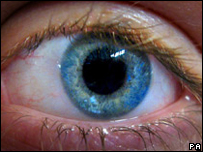 But Rob Spence is going further. He is planning to have a camera embedded in his eye socket in order to become a 'bionic reporter'.
Speaking at DNA 2009, he explained he had lost an eye when young and had long thought about camera technology to replace his lost vision.
The camera eye will move in sync with the healthy eye, it will blink and it will be able to transmit footage live.
He explains: "One of the obvious applications is to be a reporter that has access to places other reporters don't - or access to conversations that normal people don't."
He says having direct eye contact will lead to a unique point of view and potentially a new grammar of film-making.
He has developed a prototype and is looking for further funding of $50,000 to complete the technical aspects of the eye. He is currently filming a documentary about the project.
He admits it raises wider issues of privacy.
"The more I tell journalists I am getting a camera in my head, the more journalists ask if it is worse than surveillance society.
"We are sleep walking into a surveillance society and nobody cares. But if I say I am getting an eye camera people say it is ethically tricky."
But he says: "I wouldn't release any footage without a release form."
His project points to a time when people may replace healthy, working eyes with cameras.
"It seems shocking now, but it will become and more normal."
He says he expects to have a working prototype in the next month.
"Stay tuned: eyeborg is coming."

Spotify's security bloomer
- 5 Mar 09, 09:05 GMT
Well now we know that the streaming music service Spotify is a grown-up web company - it's just had its first security disaster. Last night I was among those subscribers who got a rather worrying email. It warned that a group had managed to "compromise our protocols" and had gained access to information. In other words, hackers had found a back door open to Spotify and had got their sticky fingers all over its filing system.
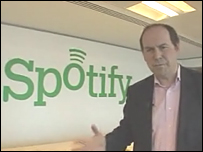 The data at risk included our passwords, plus "your email address, birth date, gender, postal code and billing receipt details." Fortunately, credit card details are not stored by Spotify so were not at risk. But the company strongly advised its users to change their passwords for Spotify - and for anything else where they use the same password. For some people who can never think of anything other than their dog's name when signing up to a new web service that is going to mean a lot of work.
By coincidence, I was involved yesterday afternoon in a long discussion about Spotify on Radio 5 Live's Simon Mayo show, which included Daniel Ek, the company's founder, on the line from Stockholm. Amongst other things, we learned that Bono hadn't heard of Spotify - where U2's new album was previewed - until told about it by Simon on last Friday's show, and that Daniel Ek still buys vinyl from time to time because it offers better quality than his online music.
What Mr Ek never breathed a word about was the security breach - but I notice that the blog post about the issue went up on the Spotify site at 16.31 on Wednesday, just half an hour after we came off air. Surely Daniel Ek knew about the issue before he went on 5 Live - and could have taken the opportunity to reassure subscribers?
Late on Wednesday, Spotify put up a second blog post in which it says only a small number of people could actually be at risk of having their passwords stolen. While some subscribers praised the company for its openness, others were not impressed, like this one :"Your server's been overloaded when you could have given that detail and calmed everyone down. Very not clever."
Spotify will survive this crisis - and hopefully learn from it - because it is already proving a hugely useful service to more than a million music lovers. But, remember, most of its users are getting their music for free on the ad-supported service. Despite the reassurance that no credit card details were at risk, this is going to make it all the harder for Spotify to persuade people to upgrade to the premium service - and start making serious money. And that really would be "very not clever."
The BBC is not responsible for the content of external internet sites
This is dot.life - a blog about technology from BBC News.
Rory Cellan-Jones is the BBC's technology correspondent.
Maggie Shiels is the BBC's tech reporter based in Silicon Valley.
Archive
« January 2010
| Sun | Mon | Tue | Wed | Thu | Fri | Sat |
|---|---|---|---|---|---|---|
| 1 | 2 | |||||
| 3 | 4 | 5 | 6 | 7 | 8 | 9 |
| 10 | 11 | 12 | 13 | 14 | 15 | 16 |
| 17 | 18 | 19 | 20 | 21 | 22 | 23 |
| 24 | 25 | 26 | 27 | 28 |
Being Discussed Now
- Logging out... and straight back in(3)
- Gadgets of the Noughties(20)
- Plastic Logic's long journey to Vegas(21)
- Sexting teens(17)
- Wikipedia on the wane?(49)
- 'Cooling-off' for mobile phones? Not on the High Street(37)
- 2009 - the social year(36)
- Twitter, Iran and #uksnow(25)
- Broadband Britain - how far down the league?(55)
- Microsoft and Murdoch: Teaming up to bash Google?(34)
BBC Technology Headlines
- %28none%29
%28none%29 - %28none%29
%28none%29 - %28none%29
%28none%29
Visit the Technology index
Visit the BBC News website
Rory's TV/Radio reports
- Residents block Google car
Broadcast: 3 April 2009 - New adverts to tackle film piracy
Broadcast: 2 April 2009 - Call to scrap 'illegal databases'
Broadcast: 23 March 2009 - Female robot takes to the catwalk
Broadcast: 16 March 2009 - Super-charged battery breakthrough
Broadcast: 12 March 2009

- News Editors
- Sport Editors
- Journalism Labs
- BBC Internet Blog
- Radio 4 Blog
- Peston's Picks
- Nick Robinson's Newslog
- Stephanomics
- Mark Easton's UK
- Mark Mardell's America
- Nick Bryant's Australia
- Andrew Harding on Africa
- Gavin Hewitt's Europe
- Soutik Biswas' India
- dot.Rory
- Science: Jonathan Amos
- Richard Black on environment
- Today: Tom Feilden
- Fergus Walsh's medical files
- Newsnight: Paul Mason
- Newsnight: Mark Urban
- Torin Douglas
- Will Gompertz's arts
- Phil Coomes on photojournalism
- Magazine Monitor
- Mark D'Arcy in Westminster
- NI: Mark Devenport
- Scotland: Brian Taylor
- Scotland: Douglas Fraser
- Wales: Betsan Powys
- Martin Rosenbaum on FOI
- 5 Live Breakfast
- Newsnight
- PM programme (iPM)
- World Tonight: Robin Lustig
