


Copyright - the empire strikes back
- 22 Dec 08, 09:03 GMT
For years it has seemed that the music - and increasingly the film and television - industries have been on the back foot in their attempts to protect their intellectual property as the digital revolution has gathered pace. But now the empire is striking back. A series of incidents over recent days have seen the content owners and creators fighting to assert - or even extend - their rights in a digital age, and winning political backing.
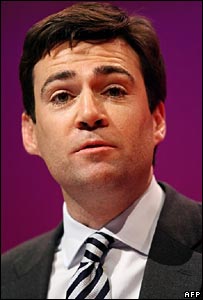 First, Britain's culture secretary Andy Burnham, weighed in on what some are calling the "Cliff Richard tax" - the battle by musicians to get copyright law extended from 50 to 95 years. Somewhat to my surprise (I thought he'd want to keep his head down on this one), Mr Burnham has said he favours an extension, though to 70 not 95 years. He says "We need a workable system of copyright to underpin the long-term health of our creative industries", and argues that this will benefit aging, impoverished session musicians rather than Sir Cliff or the record labels. But Mr Burnham has been lambasted by those who think more copyright law is the last thing we need and will act as a brake on digital innovation. Among his fiercest critics was one Andrew Gowers, who said copyright extension would provide a windfall for a few music companies, higher costs for radio stations and negligible benefits for artists. Mr Gowers has credibility in this area - he is the author of the Gowers report on the future of copyright, commissioned by Andy Burnham's own government.
Then the great and good of Britain's film and television industry - everyone from Kenneth Branagh to Richard Curtis - signed a letter to the Times calling on the government to act against the online piracy threat to their livelihoods. They say the ISPs must be forced to act against file-sharing customers: "They have the power to make significant change and to prevent their infrastructure from being used on a wholesale scale for illegal activity. If they are not prepared to act responsibly, they should be compelled to do so." There are signs that the government is sympathetic here too and may be preparing legislation to force the ISPs to do what they don't really want to do - become the file-sharing police
Finally, the music industry started getting heavy with MySpace over the use of a music-sharing website on the social network. Back in April the record labels sued Project Playlist, accusing it of running a free music business which amounted to "nothing more than a massive infringement" of their copyright. Now they've taken the battle to MySpace - and reportedly Facebook - and MySpace has stopped its users from sharing playlists created on Project Playlist over the network.
In summary, the video and music industries are fighting back against two ideas - that copyright law is irrelevant in the internet age, and that customers can now expect to get what they want online for free. But while their legal departments are busy suing everyone in sight and lobbying for more legislation, the marketing people are finally coming up with innovative ways of reaching digital customers.
I'm writing this listening variously to Handel's Messiah, Vampire Weekend and Roy Orbison (no accounting for tastes I know) via a 3g connection to a new service called Spotify. Every few tracks my music is interrupted by an advert, but apart from that I can listen to just about any piece of music I can think of for nothing (There is a subscription option which removes the adverts). This is the first streaming music service I have used which shares three qualities that I think most consumers are seeking - it has a huge catalogue, an attractive and simple user interface and it is legal. Spotify signed a licensing deal with the big four labels and a number of independents back in october.
Perhaps the music industry should be putting more of its efforts into supporting smart new digital services, rather than lobbying to protect and extend its analogue rights. But then again, the record labels would argue that there is no point in offering shiny new ways to get your products if you're simply allowing the customers to share music for nothing.
The BBC is not responsible for the content of external internet sites
This is dot.life - a blog about technology from BBC News.
Rory Cellan-Jones is the BBC's technology correspondent.
Maggie Shiels is the BBC's tech reporter based in Silicon Valley.
Archive
« January 2010
| Sun | Mon | Tue | Wed | Thu | Fri | Sat |
|---|---|---|---|---|---|---|
| 1 | 2 | |||||
| 3 | 4 | 5 | 6 | 7 | 8 | 9 |
| 10 | 11 | 12 | 13 | 14 | 15 | 16 |
| 17 | 18 | 19 | 20 | 21 | 22 | 23 |
| 24 | 25 | 26 | 27 | 28 |
Being Discussed Now
- Logging out... and straight back in(3)
- Gadgets of the Noughties(20)
- Plastic Logic's long journey to Vegas(21)
- Sexting teens(17)
- Wikipedia on the wane?(49)
- 'Cooling-off' for mobile phones? Not on the High Street(37)
- 2009 - the social year(36)
- Twitter, Iran and #uksnow(25)
- Broadband Britain - how far down the league?(55)
- Microsoft and Murdoch: Teaming up to bash Google?(34)
BBC Technology Headlines
- %28none%29
%28none%29 - %28none%29
%28none%29 - %28none%29
%28none%29
Visit the Technology index
Visit the BBC News website
Rory's TV/Radio reports
- Residents block Google car
Broadcast: 3 April 2009 - New adverts to tackle film piracy
Broadcast: 2 April 2009 - Call to scrap 'illegal databases'
Broadcast: 23 March 2009 - Female robot takes to the catwalk
Broadcast: 16 March 2009 - Super-charged battery breakthrough
Broadcast: 12 March 2009

- News Editors
- Sport Editors
- Journalism Labs
- BBC Internet Blog
- Radio 4 Blog
- Peston's Picks
- Nick Robinson's Newslog
- Stephanomics
- Mark Easton's UK
- Mark Mardell's America
- Nick Bryant's Australia
- Andrew Harding on Africa
- Gavin Hewitt's Europe
- Soutik Biswas' India
- dot.Rory
- Science: Jonathan Amos
- Richard Black on environment
- Today: Tom Feilden
- Fergus Walsh's medical files
- Newsnight: Paul Mason
- Newsnight: Mark Urban
- Torin Douglas
- Will Gompertz's arts
- Phil Coomes on photojournalism
- Magazine Monitor
- Mark D'Arcy in Westminster
- NI: Mark Devenport
- Scotland: Brian Taylor
- Scotland: Douglas Fraser
- Wales: Betsan Powys
- Martin Rosenbaum on FOI
- 5 Live Breakfast
- Newsnight
- PM programme (iPM)
- World Tonight: Robin Lustig
