


Conflict over copyright
- 26 Nov 08, 14:20 GMT
It seems an open-and-shut case, a no-brainer.
Thousands of ageing session musicians, who earn on average less than £15,000 per year, are being denied a living wage because of unfair copyright laws. Whereas composers and authors get to keep their rights for 70 years after they die - or rather, their heirs do - for performers, the cut-off point comes 50 years after the original performance.
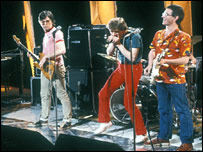 The effect is that musicians who played on some of the classic tracks of the early 1960s will be denied what is in effect their pension because the royalities will dry up just as they really need them. Take Tom McGuinness, who played guitar in Manfred Mann on that classic track Do Wah Diddy Diddy. The song was released in 1964 - so in 2014, Mr McGuinness will stop getting any payments.
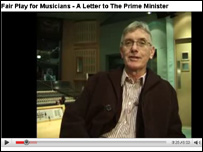 Now he's among a number of musicians who've sent a video message to the prime minister urging him to change his mind about an EU plan to extend copyright. In the video, Mr McGuinness says, "I've been a working musician for 44 years now and I've made records which have been hits and records which have been misses. I don't understand how ethically and morally you do not support the extension of copyright."
So, should Gordon Brown pay heed to the musicians' appeal and put his weight behind a European Commission directive that would extend performers' copyright to 95 years? Well, if he does he will be swimming against the digital tide - and against his own government's stated policy of making copyright less complicated.
In the internet age, content new and old is making its way online, where it is being shared, mashed up, recut and generally recycled. Just go to YouTube and search for Manfred Mann. You'll find Do Wah Diddy Diddy straight away, but I very much doubt that if you end up watching the old television show where the song is played, Tom McGuinness will get a penny in royalties. Now YouTube's owner Google is, as we've previously noted, collaborating with copyright owners who want to identify their material on the site, and sometimes to erase it. But, in the intellectual property wars, the file sharers are winning.
So there's an online revolution underway against any kind of copyright. But that revolution doesn't just involve the mllions who indulge in illegal file sharing. Even copyright owners are finding that the complex web of rights and royalties involved in any piece of content they own is making it quite tricky to put that material online.
All big media businesses - including the BBC of course - are desperate to distribute more of their programmes, their music and their films over the internet but they are finding that this involves extremely complex negotations with the artists who created that material. When it comes to exploiting archive material, the whole business is even more painful. They won't want that process made even tougher by an extension of copyright for performers.
So the idea that musicians like Tom McGuinness should continue to reap some modest reward for their creativity sounds appealing. But if Gordon Brown decides Do Wah Diddy Diddy is a cultural treasure that needs further protection, there will be a chorus of boos from those who believe copyright law is a brake on innovation.
The BBC is not responsible for the content of external internet sites
This is dot.life - a blog about technology from BBC News.
Rory Cellan-Jones is the BBC's technology correspondent.
Maggie Shiels is the BBC's tech reporter based in Silicon Valley.
Archive
« January 2010
| Sun | Mon | Tue | Wed | Thu | Fri | Sat |
|---|---|---|---|---|---|---|
| 1 | 2 | |||||
| 3 | 4 | 5 | 6 | 7 | 8 | 9 |
| 10 | 11 | 12 | 13 | 14 | 15 | 16 |
| 17 | 18 | 19 | 20 | 21 | 22 | 23 |
| 24 | 25 | 26 | 27 | 28 |
Being Discussed Now
- Logging out... and straight back in(3)
- Gadgets of the Noughties(20)
- Plastic Logic's long journey to Vegas(21)
- Sexting teens(17)
- Wikipedia on the wane?(49)
- 'Cooling-off' for mobile phones? Not on the High Street(37)
- 2009 - the social year(36)
- Twitter, Iran and #uksnow(25)
- Broadband Britain - how far down the league?(55)
- Microsoft and Murdoch: Teaming up to bash Google?(34)
BBC Technology Headlines
- %28none%29
%28none%29 - %28none%29
%28none%29 - %28none%29
%28none%29
Visit the Technology index
Visit the BBC News website
Rory's TV/Radio reports
- Residents block Google car
Broadcast: 3 April 2009 - New adverts to tackle film piracy
Broadcast: 2 April 2009 - Call to scrap 'illegal databases'
Broadcast: 23 March 2009 - Female robot takes to the catwalk
Broadcast: 16 March 2009 - Super-charged battery breakthrough
Broadcast: 12 March 2009

- News Editors
- Sport Editors
- Journalism Labs
- BBC Internet Blog
- Radio 4 Blog
- Peston's Picks
- Nick Robinson's Newslog
- Stephanomics
- Mark Easton's UK
- Mark Mardell's America
- Nick Bryant's Australia
- Andrew Harding on Africa
- Gavin Hewitt's Europe
- Soutik Biswas' India
- dot.Rory
- Science: Jonathan Amos
- Richard Black on environment
- Today: Tom Feilden
- Fergus Walsh's medical files
- Newsnight: Paul Mason
- Newsnight: Mark Urban
- Torin Douglas
- Will Gompertz's arts
- Phil Coomes on photojournalism
- Magazine Monitor
- Mark D'Arcy in Westminster
- NI: Mark Devenport
- Scotland: Brian Taylor
- Scotland: Douglas Fraser
- Wales: Betsan Powys
- Martin Rosenbaum on FOI
- 5 Live Breakfast
- Newsnight
- PM programme (iPM)
- World Tonight: Robin Lustig
