


UK stops listening, starts playing
- 5 Nov 08, 13:31 GMT
If you work in the music industry, or more particularly in a high street music retailer, then a new report makes depressing reading. Verdict Research says video games sales will outstrip music and video sales in the UK this year.The video games business has had a startlingly good year - sales up 42% - while music is still in the doldrums.
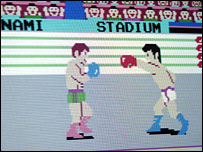 Mind you, Verdict has chucked in hardware - consoles, controllers - along with the games in its figure for the video games market, which is a bit like including MP3 players and TVs for the music and video sales. Still, it's pretty clear that playing, rather than listening or watching, is becoming Britain's favourite - or at least most lucrative - leisure time activity.
What's really gloomy for the high street is that music fans seems to have got out of the habit of leaving home to buy a CD. It's the internet that's to blame - not so much file-sharing or even legal downloads, as physical sales from online stores. Verdict reckons that less than two thirds of CDs and DVDs are now sold in stores rather than online.
 Little by little, though, the music retailers do seem to be finding a way to cope with this changing world. How? Partly by turning into games stores. HMV, which was having a miserable time a year ago, reported a big rise in profits a few months back, and boasted that a new store format was paying off. Those new stores are designed to attract games fans, with, in the words of the company "a social hub providing access to entertainment websites, multi-player games zones and transactional kiosks." Zavvi - once Virgin Megastores - is following a similar route, offering less music and more space for games.
So it may be time to write the obituary for the old-fashioned music store. From now on it may be easier to find a rare early edition of Doom on the high street than to buy Bob Dylan's bootleg series on CD.
Surfing the election
- 5 Nov 08, 10:15 GMT
Life was so much simpler on election nights in the old days. You slumbered in front of the telly into the early hours, occasionally switching channels - if you were a real political anorak - to check on who was getting the results more quickly. Then you went to bed and got the result the next morning.
 But today's interactive, digital multi-platform election viewer is presented with a much more rigorous challenge. At times last night, as I tried to follow the US elections, so much data was coming at me from so many sources I felt my brain might explode. I was hopping through every possible TV channel - the BBC, CNN, al-Jazeera, France 24, to name but a few.
I was surfing any number of websites, from the BBC's live text coverage to the New York Times, from the Huffington Post to Google News. There was a constant pinging from my Twitter feed, as friends provided a stream of instant analysis of the coverage and the politics.
Then there was Twitter's election site which tracked anything anyone anywhere was saying about the election - from a disgruntled McCain supporter:
"Went to eat at chili's so we could ignore the obama victory. They sat us right in front of a tv w/ cnn on. :-( "
To someone heading for the Chicago park where the Obama victory celebration would take place:
"We're in! Now in the holding area right outside the park."
Still, until just after 0100, this great flood of data produced very little that meant anything to me in terms of the result. CNN had beamed their Chicago reporter via a hologram into their New York studio - an amazing but utterly pointless advance in election technology. The BBC had two bloggers scanning their laptops in a Times Square studio - though neither seemed to have any fresh insight into the race. And conflicting rumours were scurrying around the web at ever greater speed.
All of this new technology was not delivering faster results. In fact, you got the sense that the networks, burned by previous misleading exit polls, were being ultra-cautious in "calling" states for Obama or McCain.
It was only at about 0200 that the picture really began to clear, and that was because the networks were finally becoming confident enough to call some of the key states. And what were the blogs and tweets and websites telling the world? That "Fox has called Ohio for Obama" or "CNN says Obama leads in Florida." So despite the proliferation of new voices that the web has delivered to election coverage, it was still the powerful voices of the old media - the mighty networks rich enough to pay for a mammoth polling operation - which brought the news to homes across the United States and much of the rest of the world.
Watching this election was certainly made far more enjoyable by the interactive, communal experience offered by the web. Alone on the sofa, with my family long since tucked up in bed, I was nevertheless connected to a worldwide community, and so able to shout at the TV or the web - and get a response. In fact, online friends kept me up and watching far later than I'd planned. But did the denizens of Web 2.0 get the news of an Obama victory more quickly than the couch-potatoes? I don't think so.
The BBC is not responsible for the content of external internet sites
This is dot.life - a blog about technology from BBC News.
Rory Cellan-Jones is the BBC's technology correspondent.
Maggie Shiels is the BBC's tech reporter based in Silicon Valley.
Archive
« January 2010
| Sun | Mon | Tue | Wed | Thu | Fri | Sat |
|---|---|---|---|---|---|---|
| 1 | 2 | |||||
| 3 | 4 | 5 | 6 | 7 | 8 | 9 |
| 10 | 11 | 12 | 13 | 14 | 15 | 16 |
| 17 | 18 | 19 | 20 | 21 | 22 | 23 |
| 24 | 25 | 26 | 27 | 28 |
Being Discussed Now
- Logging out... and straight back in(3)
- Gadgets of the Noughties(20)
- Plastic Logic's long journey to Vegas(21)
- Sexting teens(17)
- Wikipedia on the wane?(49)
- 'Cooling-off' for mobile phones? Not on the High Street(37)
- 2009 - the social year(36)
- Twitter, Iran and #uksnow(25)
- Broadband Britain - how far down the league?(55)
- Microsoft and Murdoch: Teaming up to bash Google?(34)
BBC Technology Headlines
- %28none%29
%28none%29 - %28none%29
%28none%29 - %28none%29
%28none%29
Visit the Technology index
Visit the BBC News website
Rory's TV/Radio reports
- Residents block Google car
Broadcast: 3 April 2009 - New adverts to tackle film piracy
Broadcast: 2 April 2009 - Call to scrap 'illegal databases'
Broadcast: 23 March 2009 - Female robot takes to the catwalk
Broadcast: 16 March 2009 - Super-charged battery breakthrough
Broadcast: 12 March 2009

- News Editors
- Sport Editors
- Journalism Labs
- BBC Internet Blog
- Radio 4 Blog
- Peston's Picks
- Nick Robinson's Newslog
- Stephanomics
- Mark Easton's UK
- Mark Mardell's America
- Nick Bryant's Australia
- Andrew Harding on Africa
- Gavin Hewitt's Europe
- Soutik Biswas' India
- dot.Rory
- Science: Jonathan Amos
- Richard Black on environment
- Today: Tom Feilden
- Fergus Walsh's medical files
- Newsnight: Paul Mason
- Newsnight: Mark Urban
- Torin Douglas
- Will Gompertz's arts
- Phil Coomes on photojournalism
- Magazine Monitor
- Mark D'Arcy in Westminster
- NI: Mark Devenport
- Scotland: Brian Taylor
- Scotland: Douglas Fraser
- Wales: Betsan Powys
- Martin Rosenbaum on FOI
- 5 Live Breakfast
- Newsnight
- PM programme (iPM)
- World Tonight: Robin Lustig
