


CNN, Steve Jobs, and a dodgy rumour
- 3 Oct 08, 18:01 GMT
To what degree are mainstream media organisations responsible when they publish reports from bloggers or comments from viewers which turn out to be untrue?
The dangers of citizen journalism were graphically illustrated today when CNN published an inaccurate report from someone who claimed that Apple's boss Steve Jobs had been rushed to hospital after suffering a heart attack. Apple's shares dived in the minutes after the report was published. Here's what the piece said:
"Steve Jobs was rushed to the ER just a few hours ago after suffering a major heart attack. I have an insider who tells me that paramedics were called after Steve claimed to be suffering from severe chest pains and shortness of breath. My source has opted to remain anonymous, but he is quite reliable. I haven't seen anything about this anywhere else yet, and as of right now, I have no further information, so I thought this would be a good place to start. If anyone else has more information, please share it."
The report was not on CNN's TV channels or on its website but on iReport.com, which the cable news channel runs as a forum for anyone who wants to come and give news and views about anything.The slogan at the top of the site reads: "Unedited.Unfiltered.News."
When I contacted CNN, a spokeswoman was keen to stress that this was not their content - and it had been removed as quickly as possible. Here's the statement they sent me:
"iReport.com is an entirely user-generated site where the content is determined by the community. Content that does not comply with Community Guidelines will be removed. After the content in question was uploaded to iReport.com, the community brought it to our attention. Based on our Terms of Use that govern user behaviour on iReport.com, the fraudulent content was removed from the site and the user's account was disabled."
This kind of rumour would never be published or aired without checking by a major newspaper or broadcaster. But mainstream media organisations - including the BBC - are all under pressure to have a more open relationship with their readers and viewers, to prove that they "get" the Web 2.0 world.
The border between professional and amateur journalism is getting more blurred. But if a professional news organisation publishes an inaccurate piece by an amateur journalist, whose reputation suffers?
Free prizes? Not quite
- 3 Oct 08, 12:23 GMT
As Steve Ballmer made clear in our interview this week, Microsoft isn't giving up on search, despite being as he put it David to Google's Goliath.
But is the latest marketing idea for Live Search just a little bit, well, desperate?
Search with us and get free prizes appears to be the idea behind the competition that has just been launched. The top prize is a wireless Xbox 360 controller.
But we've worked out that even if you did 25 searches a day (the maximum permitted in the competition rules) for the 197 days until the promotion ends you still wouldn't amass enough points to win that prize.
Sorry Steve - you're going to have to try a bit harder if you're really going to win the search contest with Google.

iPhone lifts gag order
- 3 Oct 08, 08:12 GMT
For months now, developers developing for the iPhone have been outraged and frustrated by Apple's stringent hold over them when it comes to talking about the process of creating programmes for the device.
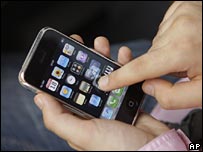 Non-disclosure agreements are not uncommon before a product is launched but highly unusual after that. And Apple's initial decision to make people who used its software development kit sign NDA's made discussion about developing for the phone downright difficult.
It's meant no forums, chat rooms, writing for trade journals, talking to the press or even getting together to talk about the ups and downs and ins and outs of developing applications for the iPhone.
Some developers openly admitted they were reluctant to develop for the iPhone because of the NDA. The Pragmatic Programmers, Andy Hunt and Dave Thomas, even had to cancel a book they had planned for iPhone development.
Highly respected developer Craig Hockenberry, wrote an open letter to Steve Jobs to express his disgust.
"I'm trying to stay positive in spite of recent developments, but I'm finding my attraction to the iPhone fades a little bit each day. I think it's important that you know that."
Justin Williams of Second Gear told Ars Technica "I'm starting not to beleive in the iPhone platform and that is scary because I'm sure I'm not the only developer."
Common sense has won the day and Apple has now decided to drop the non-disclosure agreement for iPhone software.
In a statement, the company said "The NDA has created too much of a burden on developers, authors and others interested in helping further the iPhone's success, so we are dropping it for released software."
Did the Cupertino firm really hear the torrent of discontent from developers or did the emegence of Google's Android powered mobile phone the G1 help nudge them in the right direction? Did the fear that developers might flee Apple for Google's open platform result in the shift?
One can only guess the reasons for the final about face but the reaction from the developer world has been pretty positive.
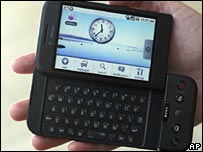 The Pragmattic Programmers have un-cancelled their book, so to speak. Andy Hunt told ZDNet "After a rocky start, I have to say we've had nothing but help and support from folks in Apple. And eventually, the senior management listened to the community and did the right thing."
"Let's enjoy our newfound freedom to discuss the iPhone SDK," said a relieved Mr Hockenberry.
There is a belief that lifting the NDA will mean higher quality software, more competiton and a better product all round. That is of course if you pass muster with Apple and the company allows you to develop for the App Store. But that's a whole other ball game. For the moment Apple's about face will surely prove that yes, it's good to talk.
The BBC is not responsible for the content of external internet sites
This is dot.life - a blog about technology from BBC News.
Rory Cellan-Jones is the BBC's technology correspondent.
Maggie Shiels is the BBC's tech reporter based in Silicon Valley.
Archive
« January 2010
| Sun | Mon | Tue | Wed | Thu | Fri | Sat |
|---|---|---|---|---|---|---|
| 1 | 2 | |||||
| 3 | 4 | 5 | 6 | 7 | 8 | 9 |
| 10 | 11 | 12 | 13 | 14 | 15 | 16 |
| 17 | 18 | 19 | 20 | 21 | 22 | 23 |
| 24 | 25 | 26 | 27 | 28 |
Being Discussed Now
- Logging out... and straight back in(3)
- Gadgets of the Noughties(20)
- Plastic Logic's long journey to Vegas(21)
- Sexting teens(17)
- Wikipedia on the wane?(49)
- 'Cooling-off' for mobile phones? Not on the High Street(37)
- 2009 - the social year(36)
- Twitter, Iran and #uksnow(25)
- Broadband Britain - how far down the league?(55)
- Microsoft and Murdoch: Teaming up to bash Google?(34)
BBC Technology Headlines
- %28none%29
%28none%29 - %28none%29
%28none%29 - %28none%29
%28none%29
Visit the Technology index
Visit the BBC News website
Rory's TV/Radio reports
- Residents block Google car
Broadcast: 3 April 2009 - New adverts to tackle film piracy
Broadcast: 2 April 2009 - Call to scrap 'illegal databases'
Broadcast: 23 March 2009 - Female robot takes to the catwalk
Broadcast: 16 March 2009 - Super-charged battery breakthrough
Broadcast: 12 March 2009

- News Editors
- Sport Editors
- Journalism Labs
- BBC Internet Blog
- Radio 4 Blog
- Peston's Picks
- Nick Robinson's Newslog
- Stephanomics
- Mark Easton's UK
- Mark Mardell's America
- Nick Bryant's Australia
- Andrew Harding on Africa
- Gavin Hewitt's Europe
- Soutik Biswas' India
- dot.Rory
- Science: Jonathan Amos
- Richard Black on environment
- Today: Tom Feilden
- Fergus Walsh's medical files
- Newsnight: Paul Mason
- Newsnight: Mark Urban
- Torin Douglas
- Will Gompertz's arts
- Phil Coomes on photojournalism
- Magazine Monitor
- Mark D'Arcy in Westminster
- NI: Mark Devenport
- Scotland: Brian Taylor
- Scotland: Douglas Fraser
- Wales: Betsan Powys
- Martin Rosenbaum on FOI
- 5 Live Breakfast
- Newsnight
- PM programme (iPM)
- World Tonight: Robin Lustig
