


Express your inner Geek
- 13 Aug 08, 17:49 GMT
Graham Linehan, writer of the peerless geek sitcom, the IT Crowd wants our help in providing props for the third series of the comedy programme, which he's just finished writing.
The IT Crowd has always been spot on in using authentic props on the show, with great bits of hardware and general tech/geek references.
Writing on his blog (where else?) he's asked the audience to contact the production firm behind the show to suggest items.
I fancy volunteering the following from my own personal stock of IT and geekiness:
A Dragon 32 computer
The first issue of Amiga Format
A Sony Trinitron from the early 1970s
A 7inch single of Jean-Michel Jarre's Oxygene IV
Anyone else fancy offering up some suggestions?
Technology blog links: 13/08/08
- 13 Aug 08, 15:36 GMT
As I'm working away from the technology section for a few weeks on a side project my postings on dot.life will be a lot lighter.
So I'll be trying to link to other bits and pieces that I think are worth reading.
Here are some for today:
'Slow' light to speed up the net
BBC News Technology
Sony takes wraps off PlayTV for PlayStation 3
The Guardian Games blog
Microsoft patch Tuesday fixes six flaws
Silicon.com
Seventeen percent of GTA IV buyers 'were minors'
Gamsutra
Yahoo's location aware Fire Eagle goes live
Lifehacker

US media's crimes against Web 2.0
- 13 Aug 08, 09:30 GMT
I've been on holiday - and mostly offline - in the United States for the last couple of weeks, but one story has caught my eye.
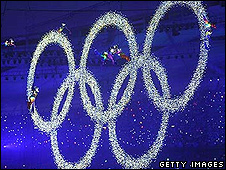 Two American "old media" organisations - a TV network and a newspaper - have had ridicule poured upon their heads for crimes against the Web 2.0 orthodoxy. But both companies may feel they are doing what is right for their 2008 audiences - and for their bottom line.
First in the dock is NBC which chose to broadcast the Olympics opening ceremony 12 hours after it happened in Beijing, in American prime-time. To a British viewer it was a bizarre move - while the rest of the world watched the ceremony live Americans had to wait - and even in the US, NBC came in for some heavy flak.
The New York Times described what it called a game of "whack-at-mole" as footage of the ceremony kept popping up all over the web, while NBC tried to protect its exclusive rights by suppressing it in a seemingly doomed attempt to prevent American citizens from getting an early peak.
The other media business under fire was the Philadelphia Inquirer newspaper whose managing editor sent a memo to staff suggesting that much of the paper's best content - investigative scoops, reviews, features - should appear in print before it went online. You'd think from the reaction of the digerati that the Inquirer was planning to take down the internet and burn bloggers at the stake.
The US new media pundit and professor Jeff Jarvis described the move this way: "You are killing the paper. You might as well just burn the place down. You're setting a match to it...It is suicide. It is murder. You should be ashamed of yourselves." So, um, he thinks they might have got it wrong?
Of the two cases before the Web 2.0 court, NBC's is the easier. Its decision to show the Beijing opening in prime-time rather than live over American breakfast tables has left it rolling in Olympic gold. 34 million people tuned in to watch the ceremony - and the endless "messages" from big advertisers that proved an irritating distraction for this British viewer but hugely lucrative for NBC.
All the leaks on the web and the chatter in the blogs about the spectacular show may even have helped boost the audience, the biggest in the US for any Olympics not held in their territory.
For all the talk of the web taking the power from the schedulers and giving it back to the audience, it's still quite a struggle for anyone but the determined few to get what they want from the Olympics online.
Desperate to see Nicole Cooke's gold medal sprint in the cycling, I had to resort to YouTube - the footage was "not available in this territory" when I tried to watch it on the BBC website from New York. So, in 2008 at least, the broadcasters and the IOC are managing to hold back the web tide, to the benefit of the bottom line, if not the audience.
And what of the thought-crimes at the Philadelphia Inquirer? The paper may be in decline, but it may also feel that, right now, it still has to give its remaining old economy readers a reward for the 75 cents they shell out most days. Jeff Jarvis and many who've responded to his blog suggest there is now a perfect opportunity for a new Philadelphia online news operation to come and steal the Inquirer's lunch. But maybe breaking news - which will still go online first on the paper's philly.com - is not the future for newspapers anyway?
Perhaps in-depth investigations, crafted features, and trenchant, well-informed columnists will provide a more compelling reason to keep buying a paper. And will the Inquirer's online customers really be so aggrieved to get that content at the same time, or even a few hours after the sad old saps who like to turn a page rather than click on a link?
As the new media future arrives, old media organisations on both sides of the Atlantic are experimenting furiously with platforms they may struggle to understand. Newspaper reporters are trying to become broadcasters, TV news correspondents are doing a little light blogging, and broadcasters are making more of their content available online - NBC has had more than a million viewers for streamed footage of one swimming event.
But the habits of media audiences are changing more slowly than some pundits predicted - and getting too far ahead of them is as dangerous as being left behind. By 2012 the revolution may have happened, but for now the likes of NBC and the Philadelphia Inquirer are betting that they can still profit from the old model.
The BBC is not responsible for the content of external internet sites
This is dot.life - a blog about technology from BBC News.
Rory Cellan-Jones is the BBC's technology correspondent.
Maggie Shiels is the BBC's tech reporter based in Silicon Valley.
Archive
« January 2010
| Sun | Mon | Tue | Wed | Thu | Fri | Sat |
|---|---|---|---|---|---|---|
| 1 | 2 | |||||
| 3 | 4 | 5 | 6 | 7 | 8 | 9 |
| 10 | 11 | 12 | 13 | 14 | 15 | 16 |
| 17 | 18 | 19 | 20 | 21 | 22 | 23 |
| 24 | 25 | 26 | 27 | 28 |
Being Discussed Now
- Logging out... and straight back in(3)
- Gadgets of the Noughties(20)
- Plastic Logic's long journey to Vegas(21)
- Sexting teens(17)
- Wikipedia on the wane?(49)
- 'Cooling-off' for mobile phones? Not on the High Street(37)
- 2009 - the social year(36)
- Twitter, Iran and #uksnow(25)
- Broadband Britain - how far down the league?(55)
- Microsoft and Murdoch: Teaming up to bash Google?(34)
BBC Technology Headlines
- %28none%29
%28none%29 - %28none%29
%28none%29 - %28none%29
%28none%29
Visit the Technology index
Visit the BBC News website
Rory's TV/Radio reports
- Residents block Google car
Broadcast: 3 April 2009 - New adverts to tackle film piracy
Broadcast: 2 April 2009 - Call to scrap 'illegal databases'
Broadcast: 23 March 2009 - Female robot takes to the catwalk
Broadcast: 16 March 2009 - Super-charged battery breakthrough
Broadcast: 12 March 2009

- News Editors
- Sport Editors
- Journalism Labs
- BBC Internet Blog
- Radio 4 Blog
- Peston's Picks
- Nick Robinson's Newslog
- Stephanomics
- Mark Easton's UK
- Mark Mardell's America
- Nick Bryant's Australia
- Andrew Harding on Africa
- Gavin Hewitt's Europe
- Soutik Biswas' India
- dot.Rory
- Science: Jonathan Amos
- Richard Black on environment
- Today: Tom Feilden
- Fergus Walsh's medical files
- Newsnight: Paul Mason
- Newsnight: Mark Urban
- Torin Douglas
- Will Gompertz's arts
- Phil Coomes on photojournalism
- Magazine Monitor
- Mark D'Arcy in Westminster
- NI: Mark Devenport
- Scotland: Brian Taylor
- Scotland: Douglas Fraser
- Wales: Betsan Powys
- Martin Rosenbaum on FOI
- 5 Live Breakfast
- Newsnight
- PM programme (iPM)
- World Tonight: Robin Lustig
