


How cool is Cuil?
- 28 Jul 08, 16:55 GMT
Does the world need another search engine? The people behind Cuil (pronounced cool) obviously think so. They claim that their brand new search searches three times as many pages as Google and they tell us that "rather than rely on superficial popularity metrics, Cuil searches for and ranks pages based on their content and relevance."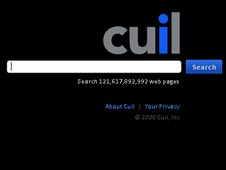 The founders of Cuil are former Google engineers and they obviously have a fiercely competitive attitude to their former mother-ship - this line in their FAQ seems aimed at another search engine:
"What information do you keep about me?"
"None. We analyze the web, not our users. Read our Privacy Policy for details. It's short."
But getting a world which now uses "google" as a verb to change its search habits is a massive challenge. So is Cuil worth a try? I tried it, and was not immediately impressed. It looks better than Google, with images integrated into search results, and I like the option to explore by categories which you are offered with your results. But in a number of cases it offered me, well, nothing.
One was a complex inquiry relating to how you find your data usage on a mobile broadband product - Google directed me to a useful forum, Cuil said "no results".
Then I put in the surname of a senior Microsoft executive and got this :"We didn't find any results for "Courtois Microsoft". Only when I put in his full name did I receive some decent links.
Perhaps it was just me. I decided to widen my research by asking colleagues across our newsroom - all of whom are rabid searchers after truth - to try a Cuil search alongside every Google inquiry. Within minutes of sending out an e-mail, I was getting plenty of responses - most telling me that they had received this message after trying a search:
"Due to overwhelming interest, our Cuil servers are running a bit hot right now. The search engine is momentarily unavailable as we add more capacity."
Oh dear - if you can't hook impatient people on the day you launch, they may not return. I decided to give it one last chance and put Cuil's fate in the hands of a real expert. Murray Dick is a BBC researcher who has spent a lot of time working out how journalists can use search more effectively - he runs an excellent seminar on webtools for journalists, which he's published on his personal blog.
His conclusions were kinder than mine, but not much:
- Search term: "The speed of sound" "This particular search highlights one of Google's many tricks - giving a calculation and conversion details of the speed of sound at the top - a serious benefit over the Cuil results."
- Search term: "Nikon d50 reviews problems". Plenty of articles on the D70 camera, but none on the D50 (which might suggest it isn't doing its job in terms of prioritising meta tags and headlines above freetext). Google however got a good review from a reputable independent source as first link.
- Search term:"Fernando Pessoa" From the point of view of someone interested in literature, Cuil returned a wiki result, and a number of literary review-type pages, both professional and amateur. However Google (assuming the consumerist angle) brought back Amazon results as a priority (with pic), then Wiki, then various others - Google is geared more towards selling than reference research.
- Search term: "What age is Gordon Strachan?"
Cuil returns nothing - it doesn't seem to be able to cope with question-based queries - compared to Ask (with same query), which finds Strachan's Wiki page, and gives the results exactly (Ask being a natural language search engine, beats others at this type of query - semantic search engines aside).
So Cuil only came out on top in one out of Murray's four searches. In summary, neither Murray nor anyone else I asked to try out Cuil saw a compelling reason to switch search engines, which is a pity, because it is getting more difficult to extract useful results from Google.
Cuil has raised impressive amounts of investor cash for a start-up taking on the biggest kid on the internet block. But seeing as I had to search Google to find out about the $25 million round of investment in April - a search on Cuil for "cuill backers" returned no results - I fear those investors may not see their money back.
UPDATE:
Well I don't look so cool now, do I? I've spent an entire blog post writing "Cuil" as "Cuill"(now corrected). Why? Because that is how I first typed it into my browser and that took me to the site. Mind you, I've done that search for "cuil backers" again and it still returns nothing useful.
The BBC is not responsible for the content of external internet sites
This is dot.life - a blog about technology from BBC News.
Rory Cellan-Jones is the BBC's technology correspondent.
Maggie Shiels is the BBC's tech reporter based in Silicon Valley.
Archive
« January 2010
| Sun | Mon | Tue | Wed | Thu | Fri | Sat |
|---|---|---|---|---|---|---|
| 1 | 2 | |||||
| 3 | 4 | 5 | 6 | 7 | 8 | 9 |
| 10 | 11 | 12 | 13 | 14 | 15 | 16 |
| 17 | 18 | 19 | 20 | 21 | 22 | 23 |
| 24 | 25 | 26 | 27 | 28 |
Being Discussed Now
- Logging out... and straight back in(3)
- Gadgets of the Noughties(20)
- Plastic Logic's long journey to Vegas(21)
- Sexting teens(17)
- Wikipedia on the wane?(49)
- 'Cooling-off' for mobile phones? Not on the High Street(37)
- 2009 - the social year(36)
- Twitter, Iran and #uksnow(25)
- Broadband Britain - how far down the league?(55)
- Microsoft and Murdoch: Teaming up to bash Google?(34)
BBC Technology Headlines
- %28none%29
%28none%29 - %28none%29
%28none%29 - %28none%29
%28none%29
Visit the Technology index
Visit the BBC News website
Rory's TV/Radio reports
- Residents block Google car
Broadcast: 3 April 2009 - New adverts to tackle film piracy
Broadcast: 2 April 2009 - Call to scrap 'illegal databases'
Broadcast: 23 March 2009 - Female robot takes to the catwalk
Broadcast: 16 March 2009 - Super-charged battery breakthrough
Broadcast: 12 March 2009

- News Editors
- Sport Editors
- Journalism Labs
- BBC Internet Blog
- Radio 4 Blog
- Peston's Picks
- Nick Robinson's Newslog
- Stephanomics
- Mark Easton's UK
- Mark Mardell's America
- Nick Bryant's Australia
- Andrew Harding on Africa
- Gavin Hewitt's Europe
- Soutik Biswas' India
- dot.Rory
- Science: Jonathan Amos
- Richard Black on environment
- Today: Tom Feilden
- Fergus Walsh's medical files
- Newsnight: Paul Mason
- Newsnight: Mark Urban
- Torin Douglas
- Will Gompertz's arts
- Phil Coomes on photojournalism
- Magazine Monitor
- Mark D'Arcy in Westminster
- NI: Mark Devenport
- Scotland: Brian Taylor
- Scotland: Douglas Fraser
- Wales: Betsan Powys
- Martin Rosenbaum on FOI
- 5 Live Breakfast
- Newsnight
- PM programme (iPM)
- World Tonight: Robin Lustig
