What are full stops?
A sentence is a group of words that are connected to each other.
A full stop shows where a sentence ends.
The parrot swooped down.
Full stops separate two sentences and show where pieces of information are not linked.
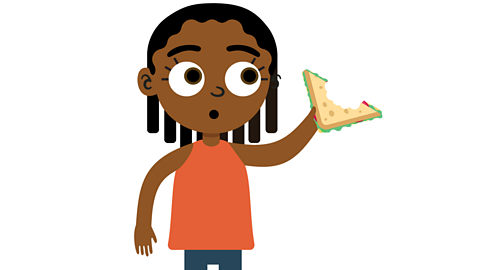
The parrot swooped down. It tried to snatch Betty's sandwich.
Using full stops in sentences
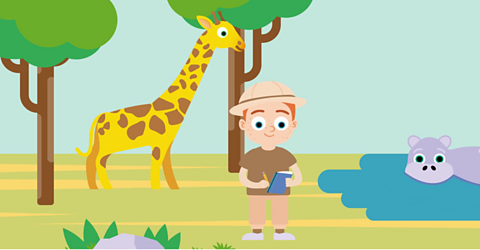
Let’s go on safari with Betty and Harry and see how they use full stops to make their notes clear.
How to use full stops
A sentence is a group of words about one idea. It begins with a capital letter and ends with a piece of punctuation.
Full stops separate sentences about different ideas, so your writing is clear.
Without a full stop, sentences can run together and sound confusing.
The elephants splashed the jeep drove away.
This sounds like the jeep got splashed by the elephants.
A full stop is needed to separate the two sentences.
The elephants splashed. The jeep drove away.
A longer sentence can link two pieces of information about the same idea using words like ‘and’ or ‘but’.
It still needs a full stop at the very end.
We watched the monkeys but they hid in the tree.
Full stops always go at the end of sentences.
Example 1
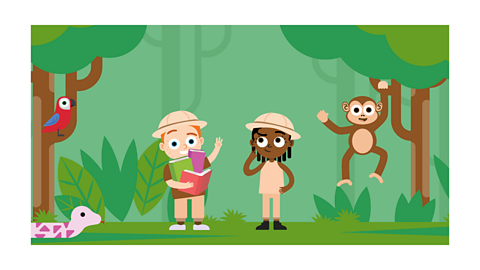
Betty and Harry have written about the rainforest on their latest adventure.
Choose the sentence written correctly.
a) I saw a bright parrot fly past.
b) the monkey swung across the branches
c) we climbed up the tall tree.
✓ This sentences is written correctly:
a) I saw a bright parrot fly past.
This sentence starts with a capital letter and ends with a fullstop.
Example 2
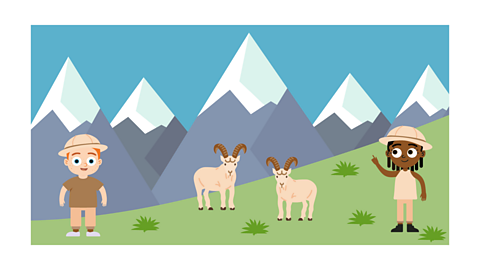
Betty and Harry are on a mountain trek. They’ve written about what they saw, but the punctuation is missing.
Add in the missing full stops to the sentence below.
We climbed a steep hill and we saw a family of goats The wind was very strong but we reached the top safely
✓ Here is the sentence with the missing full stops.
We climbed a steep hill and we saw a family of goats. The wind was very strong but we reached the top safely.
Task
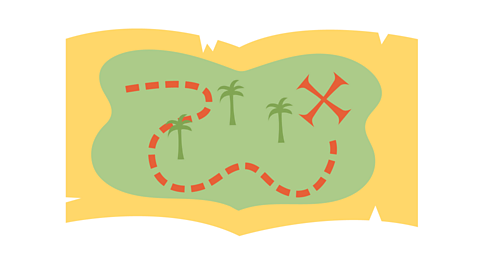
Full stop treasure hunt
Hide three “treasures” (toys, books, objects) in your room for a friend or adult to find.
To help them find the items, write a list of clue sentences.
Remember, each sentence should start with a capital letter and end with a full stop.
Each sentence should share one clue or idea.
- This object is hiding behind something.
- My teddy is near the window.
- It is next to something yellow.
Numberblocks on Bitesize!
Explore more from Numberblocks, a fun-loving group of numbers that offer maths support for primary-age children.

More on Punctuation
Find out more by working through a topic
- count4 of 6
- count5 of 6
- count6 of 6
- count1 of 6