Algebra
NEW: How to simplify expressions and expand brackets
Revise collecting like terms, using algebraic notation correctly, simplifying expressions, and multiplying a single term over a bracket. With video, quizzes and a game.
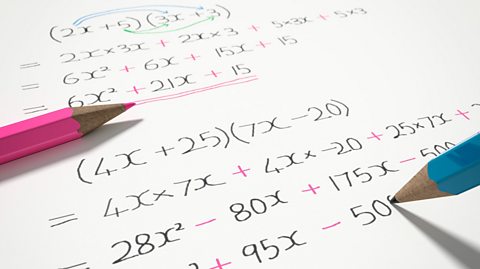
Quiz: Algebraic expressions
This interactive quiz is suitable for GCSE maths students studying expressions, simplifying expressions, expanding brackets, expanding double brackets and expanding three brackets.
Quiz: Algebraic expressions 2
This interactive quiz is suitable for GCSE maths students studying factorising, using algebra to demonstrate an argument, and proof.
NEW: Factorising expressions
Revise factorising expressions into one or two brackets. For Higher tier, factorise quadratics when the coefficient of 𝑥 squared doesn't equal 1. This guide has video and quizzes.

NEW: Algebraic reasoning and proof
Revise how to use algebra to support and construct arguments, show that two expressions are equivalent, and how to find a counterexample. This guide contains video and quizzes.

NEW: Formulae
Revise writing formulae, substituting into expressions and formulae, and how to change the subject of a formula using inverse operations. With video, quizzes and a game.
Quiz: Algebraic formulae
This interactive quiz is suitable for GCSE maths students studying formulae, substitution, creating formulae, changing the subject of a formula, rearranging formulae.
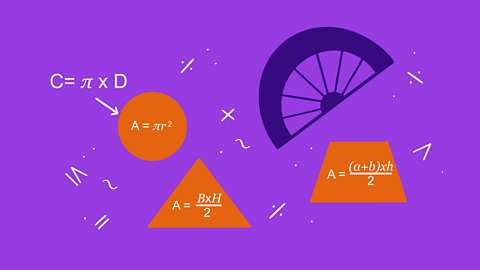
NEW: Higher – Functions
Learn about function notation, how to find an inverse function by changing the subject, and how to work with composite functions. This guide contains a quiz.
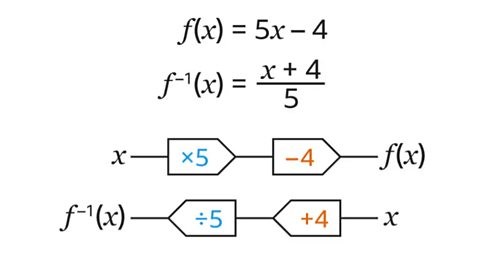
NEW: Solving one- and two-step linear equations
Learn how to use inverse operations to find the value of an unknown variable in an equation, so that the value is true. This guide contains practice questions, a quiz and a game.
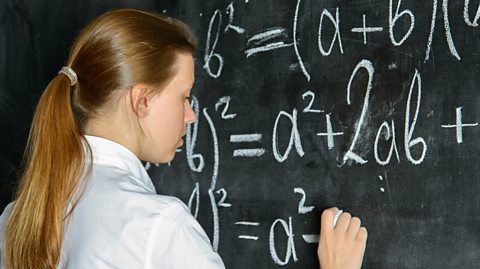
NEW: Solving more complex linear equations
Learn how to solve equations with brackets, 𝑥 terms on both sides, and fractions using inverse operations in this GCSE maths study guide. This guide contains videos and quizzes.

Quiz: Solving linear equations
This interactive quiz is suitable for GCSE maths students studying equations and identities, number machines, and solving equations.
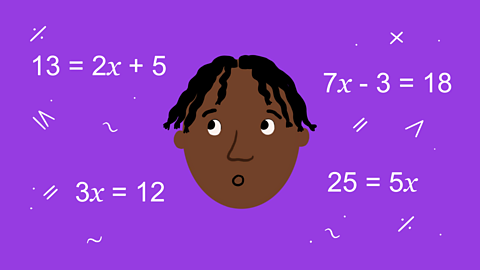
NEW: Inequalities
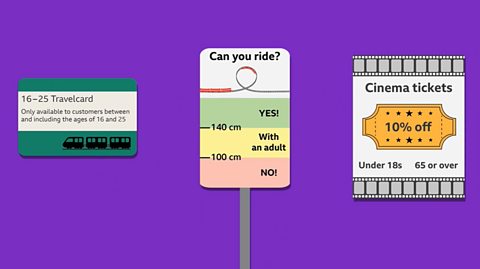
Inequalities are the relationships between two expressions not equal to one another. The symbols used for inequalities are <, >, ≤, ≥ and ≠. This guide contains video and quizzes.
Quiz: Inequalities
This interactive quiz is suitable for GCSE maths students studying inequalities, solving inequalities, integer solutions to inequalities and graphs of inequalities.

NEW: Higher – Graphs of inequalities
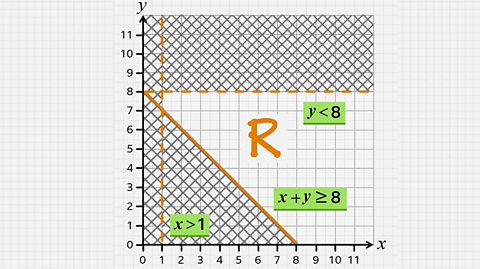
Revise representing an inequality as a region on one side of a line. Dashed lines on graphs show the line is not included in the region. This guide contains video and quizzes.
NEW: Sequences
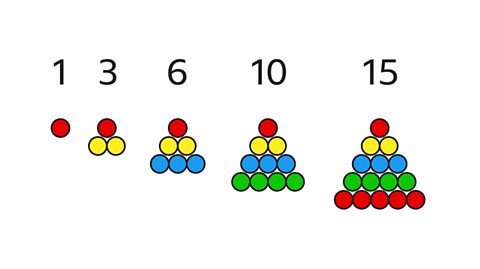
Learn about term-to-term rules, 𝑛th term rules and how to work out expressions for 𝑛th terms based on a set of numbers in a quadratic sequence. This guide contains quizzes.

NEW: Geometric and special sequences
In geometric sequences, the term-to-term rule is to multiply or divide by the same value. Other sequences include square numbers and Fibonacci sequences. This guide has quizzes.
NEW: How to plot straight line graphs
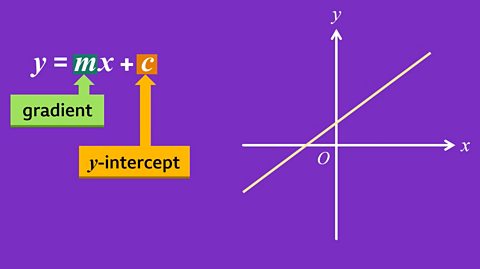
Revise plotting coordinates and creating straight line graphs to show the relationship between two variables. This guide contains video and quizzes.
Quiz: Straight line graphs
This interactive quiz is suitable for GCSE maths students studying coordinates, straight line graphs, parallel and perpendicular lines and equations of a line through two points.
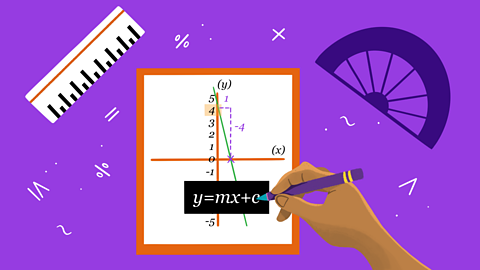
NEW: Working out equations of a line and calculating gradient
Learn how to calculate the equation of a line from a graph, work out the gradient from an equation, and visualise intercepts. This guide contains video and quizzes.
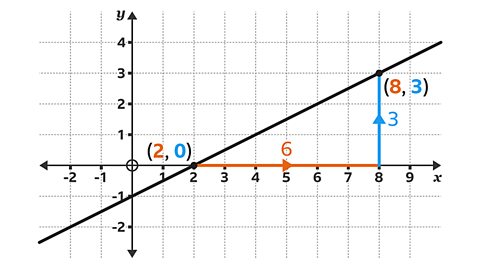
NEW: Equations of parallel and perpendicular lines
Revise finding equations of parallel lines and the gradient of perpendicular lines, and prove that given lines are parallel or perpendicular. This guide contains video and quizzes.
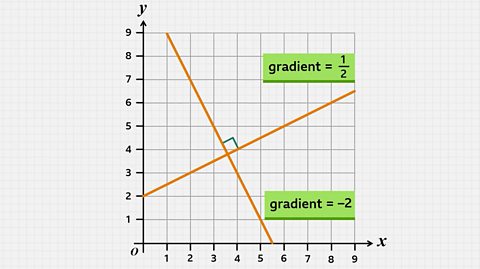
NEW: Higher – Quadratic inequalities
Revise how to solve quadratic inequalities and sketching quadratic graphs from inequalities for Higher tier. This guide contains a video, quizzes and exam-style questions.

NEW: Higher – Iterative techniques
Revise using an iterative formula over and over to solve tricky equations in this Higher tier maths guide. This guide contains a video, quiz and exam-style questions.

NEW: Higher – Transformations of functions
Revise translation and reflection of functions include cos(𝑥) and sin(𝑥) in this Higher tier maths guide. This guide contains a quiz and exam-style questions.
Algebraic fractions - Cambridge OCR
Algebraic expressions in fraction form are rational. Methods of adding, subtracting, multiplying and dividing fractions plus expanding and factorising can be used to simplify rational expressions.
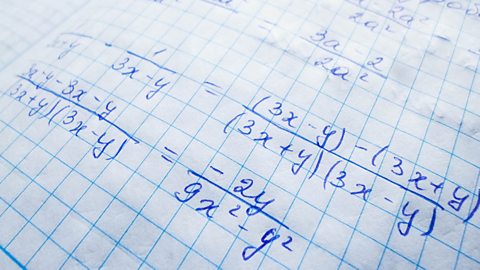
Quiz: Algebraic fractions
This interactive quiz is suitable for GCSE maths students studying simplifying rational expressions, factorising, and adding and subtracting rational expressions.
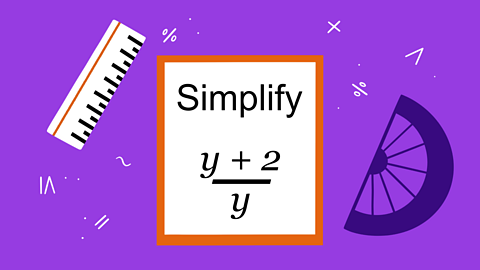
Solving simultaneous equations - Cambridge OCR
Simultaneous equations require algebraic skills to find the values of letters within two or more equations. They are called simultaneous equations because the equations are solved at the same time.
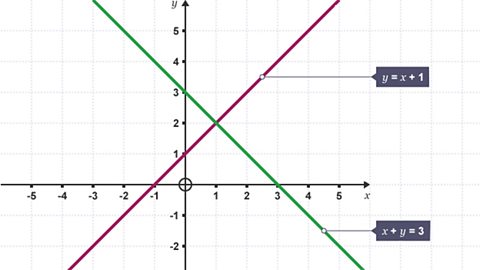
Quiz: Solving simultaneous equations
This interactive quiz is suitable for GCSE maths students studying simultaneous equations, and solving simultaneous examples with no common coefficients.
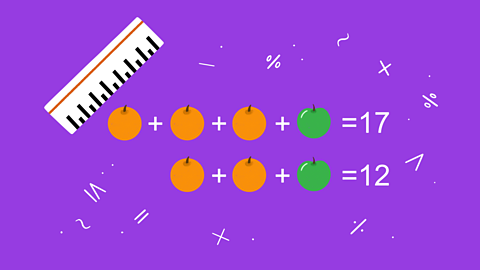
Other graphs - Cambridge OCR
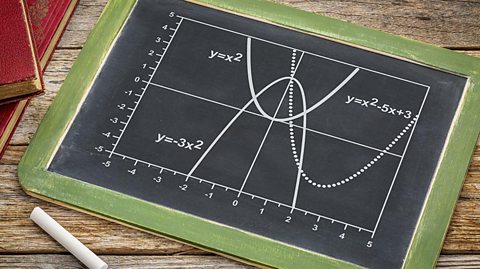
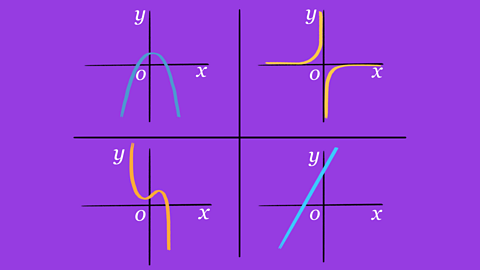
The most commonly occurring graphs are quadratic, cubic, reciprocal, exponential and circle graphs. Their equations can be used to plot their shape.
Quiz: Other graphs
This interactive quiz is suitable for GCSE maths students studying quadratic graphs, cubic graphs, reciprocal graphs, exponential graphs.
Using and interpreting graphs - Cambridge OCR
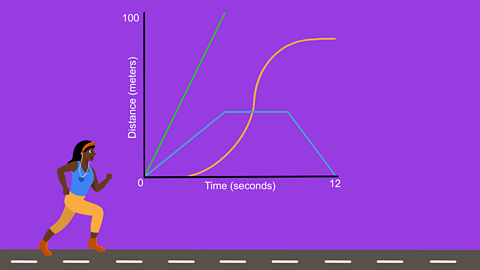
In real-life contexts, the intercept, gradient and area beneath graphs can contain information such as fixed charges, speed or distance.

Quiz: Using and interpreting graphs
This interactive quiz is suitable for GCSE maths students studying real-life graphs, distance-time and displacement-time graphs, speed-time and velocity-time graphs.
Quadratic equations - Cambridge OCR
Solve quadratic equations by factorising, using formulae and completing the square. Each method also provides information about the corresponding quadratic graph.

Links
- External linkExternal link
- SubscriptionSubscription
- External linkExternal link
