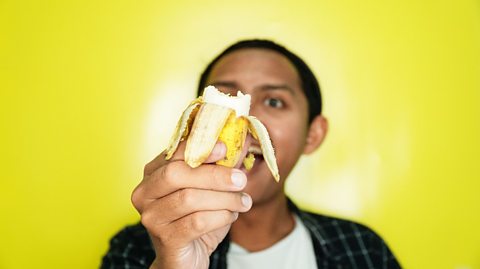
They’re bendy, they’re trendy - to flavour fans they’re friendly. But did anyone expect something as traditional and everyday as the banana to be 2026’s big viral taste?
Have a nose in coffee shops such as Black Sheep and Starbucks and you may notice they’ve been adding a variety of banana-flavoured drinks to their menus, plus ingredients like caramel and matcha.
There are almost 17m posts on Insta with the hashtag #banana and another 17k on the subject of banana lattes. TikTok is packed with posters reacting to the latest drinks given a ‘banana-y’ spin.
So where did this trend begin? BBC Bitesize Other Side of the Story has peeled back the chat to get to the facts.
Why is banana trending? And what does it have to do with K-Pop?
It may seem an unusual blend of fruit and catchy tunes but the rise of the banana owes something to the popularity of K-Pop.
In South Korea, where bands such as BTS and Blackpink were formed, bananas have long been used to flavour popular snacks and drinks. The New York Times reported that a social media trend where people mixed coffee with banana milk started there.
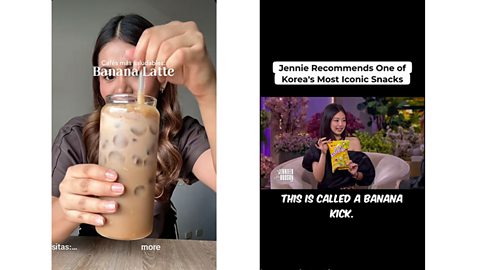
But South Korean banana snacks got an even bigger lift when Jennie Kim, a member of Blackpink, appeared on a US TV show and mentioned how much she enjoyed something called Banana Kick: corn snacks the shape and flavour of bananas. Due to the popularity of the band, exports of the snack to the USA went up by 70 per cent and a South Korean cafe in Los Angeles even started selling donuts decorated with the snack.
Celebrities are seen using a product and people copy them - psychologists call it social proof, where people look to what others are doing before deciding how to behave, especially when feeling uncertain. If someone you admire, such as Jennie Kim, is seen using a product, you may also see it as a ‘safe’ item to try, with low risks.
Bananas’ big viral secret
There is another reason some experts believe bananas have become the hero of the flavour world this summer, and it’s all to do with their familiarity.
Graeme Welter, CEO of a New York marketing company, posted on LinkedIn that the beauty of the banana is their familiarity, meaning they don’t need an explanation.
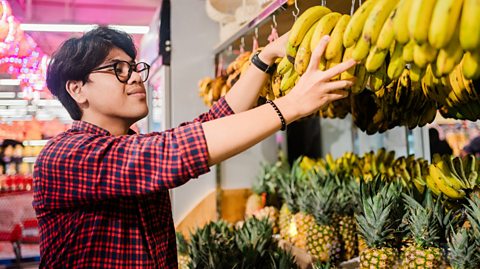
He wrote: “Every trend flavor of the last five years won on novelty. Yuzu. Ube. Pistachio. Dubai chocolate. Novelty carries an education tax: you have to teach the customer what it is before you can sell it.
"Banana is the most-produced fruit on earth. 139 million metric tons a year. Zero education tax. Familiar enough to grab without thinking, novel enough in a matcha to earn a post.”
Familiarity means something is relatable - and relatability is a big deal when it comes to viral trends. If you’re familiar with the subject of a post then you are more likely to share it. If it’s an eye-catching video of someone enjoying a brand new banana-flavoured treat, it has even more shareable potential for your friends and followers.
It may not be as ‘new’ as the purple-hued ube, but perhaps there’s something to be said for that old, reliable pal, the ‘nana. You don’t need to be a newcomer to be trendy.
This article was published in August 2026

Not sure if the news you’re seeing on social media is true or false? Can you always tell if the things you see online are real or fake?
Learn how to get the other side of the story with our quizzes, videos and explainers about media skills and viral trends including popular food myths.
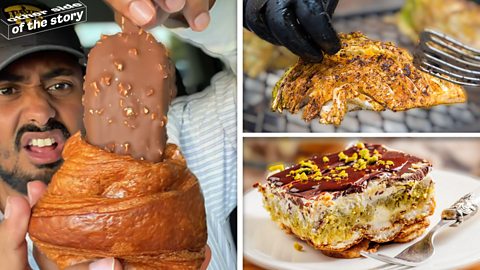
The Magnum croissant and other food trends of summer 2026
DIY ice cream pastries, grilled cabbage and pistachio are all treats to watch out for
Other Side of the Story
Back to our homepage for more quizzes and explainers about fake news, viral trends and media skills.